Resilience when faced with turbulence: a torn plantar fascia, a tumor, & a twisted year of turmoil.
An MRI last December for a then diagnosed torn plantar fascia revealed something of greater significance. The radiologist located a 2.4 x 1.2 x 0.9 cm soft tissue lesion behind my medial malleolus (the inside of my ankle bone).
I had a tumor.
“Oh.” I paused for a breath. Then, I laughed.
You read that correctly. I laughed.
After months of physical, mental, & emotional exhaustion, I found it comical that I now had something new & potentially life changing to put my fleeting energy towards.
Let’s step back to the end of July 2025…
This MRI was intended to be in August after Wilderness Traverse (a 30-hour Canadian adventure race), as I finished the race with notable foot pain. I had a bout of plantar fasciitis that spring & knew it was related to that. While driving back to my friends’ home in Caledon, Ontario, for a much needed recovery week, I turned on my phone. It pinged with a simple, yet ominous message from my sister. “Mom’s in the hospital. Call when you can.” I knew it was significant, as details were omitted. ie “Mom’s in the hospital. She broke her leg. She's ok. Call when you can.”
Service spotty, it didn’t matter, I immediately called. My mother suffered a severe aneurysm rupture while alone sometime that afternoon. My father found her slumped over on the sofa, awake, but unable to speak or move. She was quickly transported to the hospital & was admitted into the neuro ICU, where she laid in a comatose state, with an endotracheal tube hooked up to a ventilator & an external drain to her brain keeping her alive.
If there’s one thing that will eliminate post-race fatigue, it’s receiving news like that. I immediately redirected my focus on getting back to NY. It was unsafe for me to drive 10+ hours to Long Island the same day I finished racing for 24 hours straight. By the time I arrived at my friends’ house, they already spoke to my sister & presented multiple options to return swiftly, even offering to drive me in my car so I could sleep, & they’d fly back the following day. (Thank you, Duxters. Your kindness & generosity means the world to me.) My mother’s neurosurgeon was waiting for her to stabilize to coil her aneurysm, a surgery that would likely happen the following day. Arriving a half day early wouldn’t make a difference, even if it was potentially goodbye. It was best to sleep that night (I got maybe 4 hours?) & drive back in the morning.
Nothing prepares you for the first time you see somebody you know & care about in that state, with a slew of life saving equipment surrounding them. I walked into her room, turned around, & walked right out to catch my breath. As somebody who is perceptive to the energy that others emit, I did not want to bring any energy related to fear or sadness into her room.
She spent three weeks in the neuro ICU. A state of the art facility at North Shore Hospital that opened in early 2024, my interior design side found comfort in a well designed building; exactly what that team would have set out to accomplish. The family lounge & her room became a second home, even more of a main home, swapping shifts with my siblings, so that she was never alone. Every waking moment was centered around her care. I hyper-focused on scientific studies regarding treatment options, procedures, issues that arose, as well as sources like reddit, where I’d read first hand accounts by survivors with the same injury. Any of my doctors know that I arm myself with knowledge; I treated her as if this was myself, which enabled me to have in-depth conversations with her neurosurgeon & team.
Unfortunately sometime in the proceeding hours after her endovascular embolization (aneurysm coiling), she also suffered a brain stem stroke.
Her prognosis was already unfavorable. The brain stem stroke catapulted it deeper into uncertainty. One constant remained… survival. She needed three more procedures while in the ICU: a trach to replace the endotracheal tube, cerebral vasospasm surgery, as her blood vessels were constricting, & a shunt, as it was determined her brain could no longer regulate disposal of excess fluid.
Nights spent in the ICU were disrupted by jolting alarms - ventilator obstruction, body temperature, blood pressure… sometimes in excess that spoke to the reality of her condition. Sleep was not a priority to me, so movement became deprioritized. My foot was injured anyway. Though I didn’t know the exact prognosis at the time, I should have forced myself to at least swim twice a week for balance.
I stopped counting how many times people on the outside told me to take time for myself. A little advice & something I was not attuned to until I was in this position… It's always easier said than done. In scenarios like this, the ability to take time for oneself happens as a result of somebody else picking up the slack to make that time. It’s difficult to ask for help from those outside the bubble when all energy is directed towards an extreme scenario that consumes one’s life. As much as I appreciated the concern of others, it strangely became exhausting to hear it over & over with no way to achieve it. A fairly foolproof way to help - send food in the form of groceries or a meal.
My mother started to wake up here & there in the ICU & was eventually transferred to the RCU (respiratory care unit) since she had a trach. She was frail from being bedbound, & was left side affected, still unable to talk or even nod yes & no. The advocacy did not stop. It was a different kind of intense advocacy, as the next focus was getting her into an acute rehab program, where she’d receive one hour of each speech, occupational, & physical therapy five days a week. Knowing it was essential for her recovery, & even with a strong recommendation from her OT, we still had to push back multiple times. Sometimes a physiatrist would evaluate her when she was napping (napping is common & necessary/encouraged to do after suffering a brain injury), so she would receive a poor evaluation. I campaigned for her rehab, taking videos of milestones, like moving her right/non affected arm, as well as her work in OT. I would show everything to the doctors responsible for her rehab recommendation. After expressing my utter distaste to her social worker for the bedside manner of one physiatrist, she was assigned a new & compassionate one. When evaluating her, he studied the videos as well & said, “If we judge somebody solely when they’re having a bad day, we’re doing a disservice to them.” He followed that by expressing his recommendation for acute therapy.
She left for acute rehab in September, spending five weeks there. Both my sister & I observed nearly all of her therapy sessions. It was essential to know everything she was doing & how she was progressing.
With my race season cut short, I began to take any opportunity to ride local trails & head out of town to ride downhill with friends for a day or two. In my new uncertain, chaotic world, it was not only relief, but it was invigorating; though I was exhausted, it brought life back into me. My plantar fascia wasn't acting up much, other than a pebble-sized bump above my calcaneus flaring up for a day or two, so I continued to delay making an ortho appointment. Part of me didn't want to be honest with it, knowing I'd likely have to take a break from riding. I needed movement more than ever. Another part of me didn’t have the energy to deal with my own injury recovery on top of everything else.
When you focus all of your energy advocating for someone else, you may find that you lose your own voice.
Downhill season ended in November, my birthday weekend. Around the same time, after leaving acute rehab & starting sub-acute rehab, my mother landed in an unexpected month-long hospital stay. She needed two shunt adjustments & then contracted covid, which was caught early due to bloodwork. Like everything else, this stay required daily advocacy. She was in another hospital nearly two weeks prior to the month-long stay for what was thought to be just an infection, but her shunt actually needed adjustment then. She was discharged prematurely & I was disappointed that I did not fight hard enough to get transferred for proper imaging. (The shunt complicates things, as it is magnetic.) While I was in full PPE in her covid quarantine room, I decided to lead by example, advocate for myself, & see my orthopedist, Dr. Camhi, to discuss my foot.
Dr. Camhi has been my ortho for years; he understands what I do, how I think, & how I work. His treatment is not cookie cutter & his PAs & residents are always intrigued when I’m there, due to how he approaches my health. He thought the lump was scar tissue from plantar fasciitis & sent me for an MRI & to a podiatric surgeon, in case they wanted to scrape it down. I read the new MRI report in the portal; it called out the tear & continued on regarding a "mass". I quickly related that to the PF pebble, but it didn't track. The mass was larger. As I sat in the podiatrist’s office, processing its whereabouts, prodding it, did time slow & I let out a monotone "oh”... followed by a laugh. In the midst of all that’s happening, now I have to think about whether this thing hiding behind my ankle is benign or not? I didn’t know how else to respond, as it felt like I was being pranked.
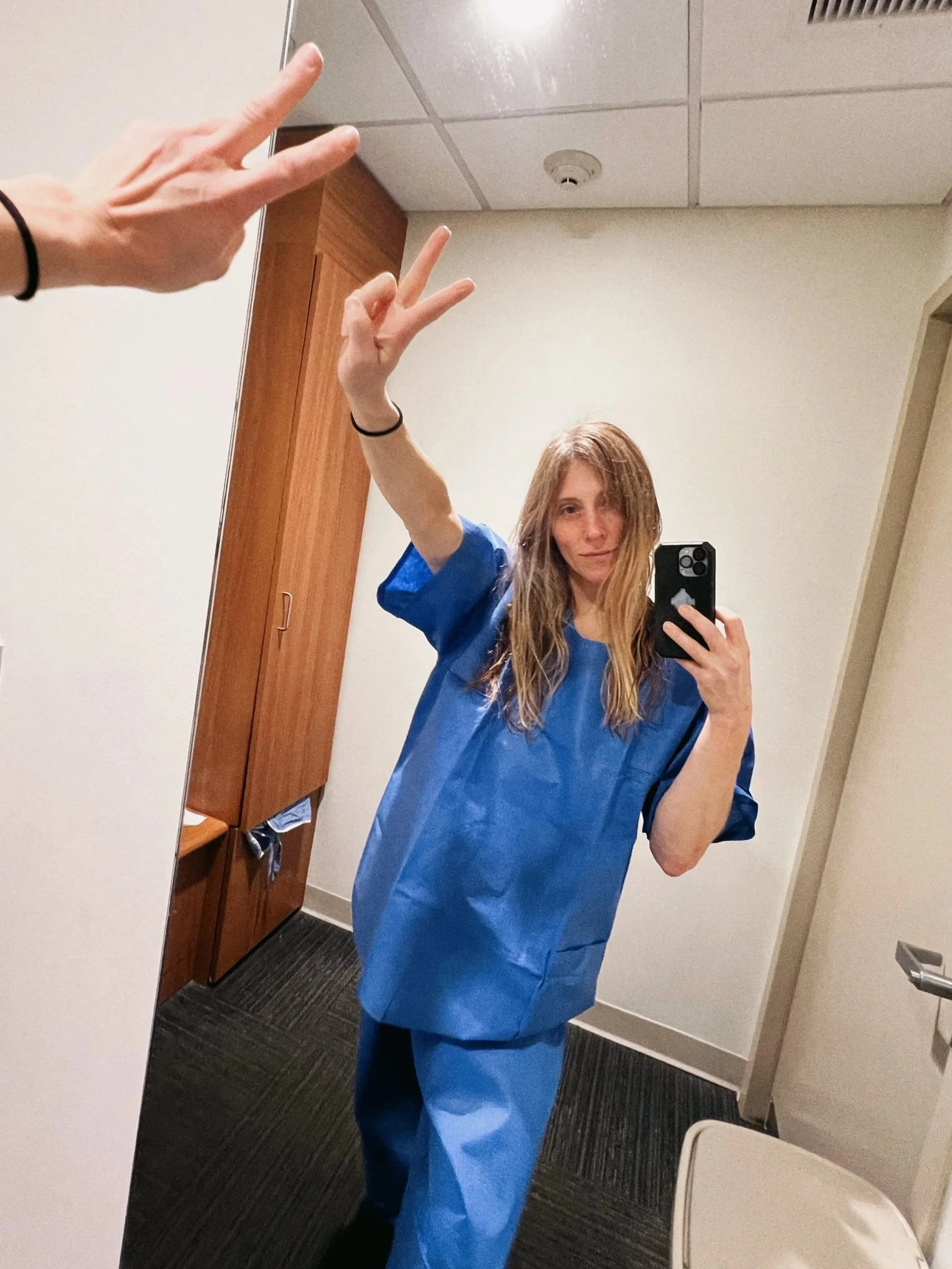
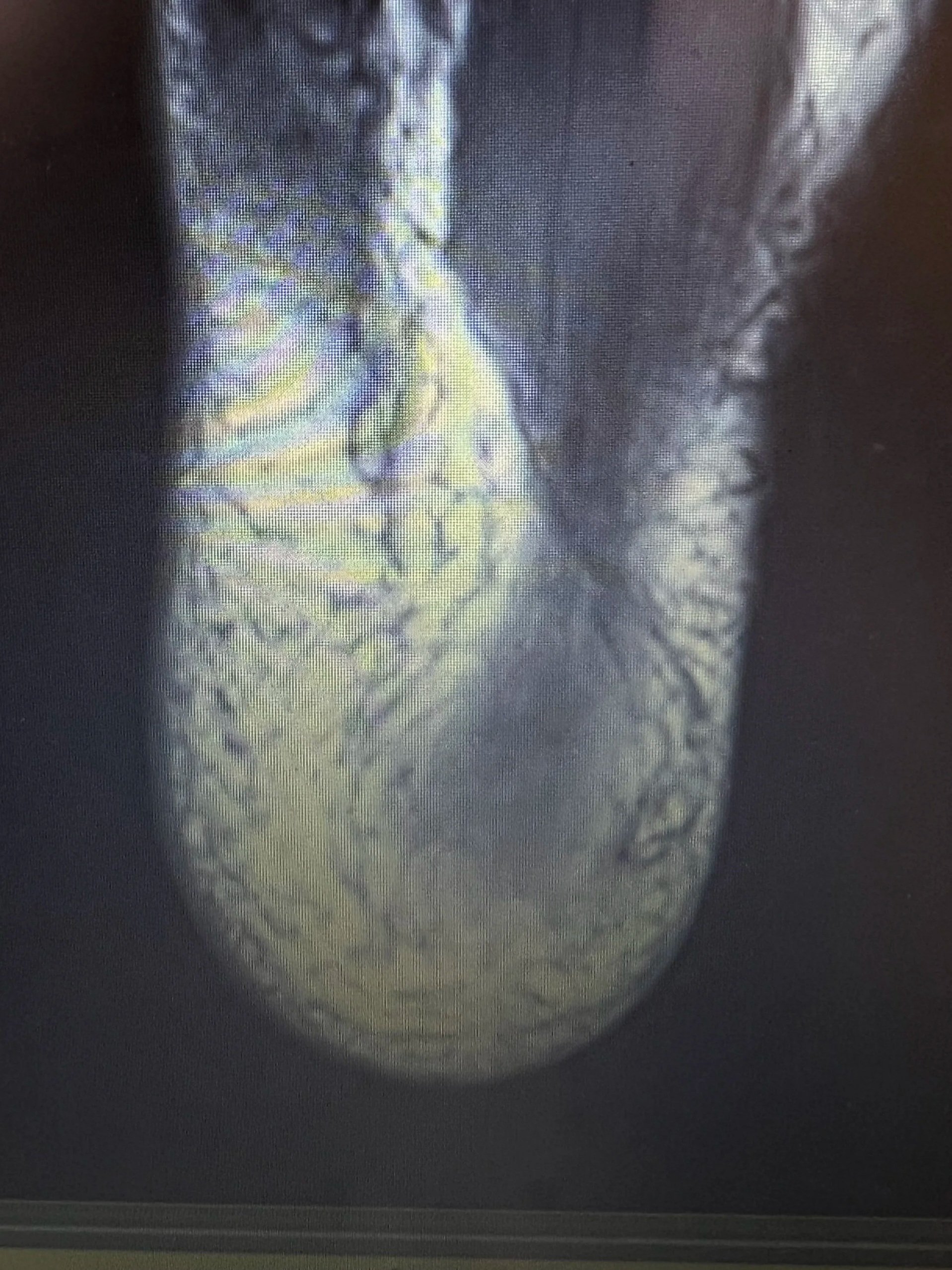
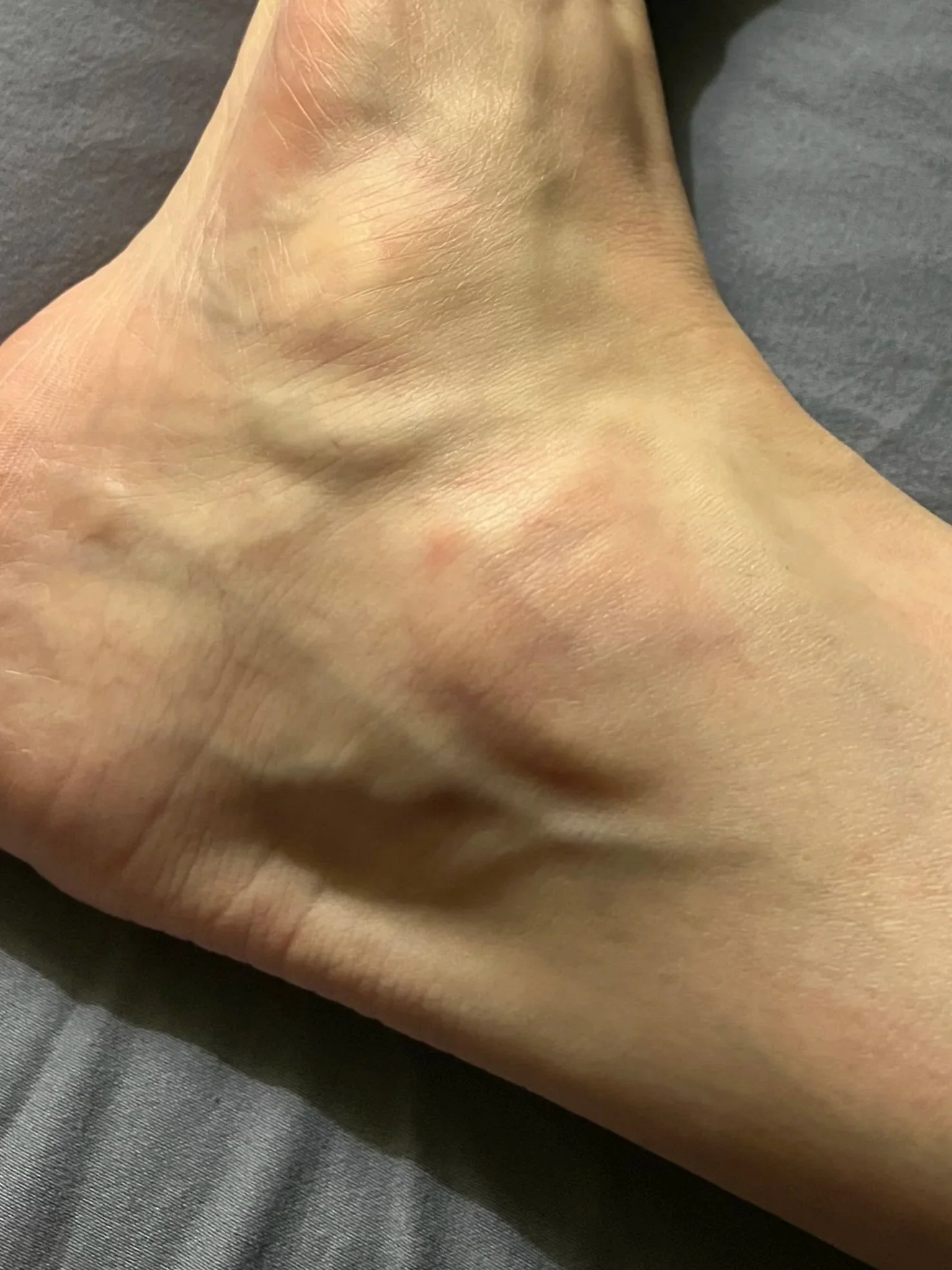
I was imprisoned in "da boot" (knee-high cam boot) again for the plantar fascia tear & had two more MRIs to get a better look at the tumor.
Both MRIs were inconclusive, the radiologist mentioned a few potential conditions which to no surprise, I thoroughly read up on. The next step was clear; it was time to see an orthopedic oncologist.
I’ve never acted so hastily, & I found the best ortho oncologist insurance would cover - turns out it was the Chief of Musculoskeletal Oncology at Northwell, Dr. Goodman. Bonus - Dr. Camhi works in the same office as him. I was accepted nearly immediately from the potential patient screening & took the first available appointment in January.
Dr. Goodman performed an ultrasound & again, inconclusive. I told him to pull up my MRI from May 2024, when I fractured my distal fibula on the same ankle. It was clear as day there! I’m still surprised & a bit frustrated that the radiologist didn’t remark on it then. The positive is that it didn’t appear to have grown, or if it did, it was minimal. I don’t even think we started to discuss treatment options before I asked if he could cut it out of me. I'm not one to jump to surgery either. I viewed that waiting for a biopsy & then scheduling surgery was a waste of time. Unlike delaying the MRI, I was ready to move forward as fast as possible. Not only did I prefer to optimize downtime while I couldn't run or ride, now that I knew of the tumor's existence, it would be difficult to mentally carry on.
Clearly surgery has its risks. The tumor appeared to have involved my flexor digitorum, the tendon that controls my four small toes; I could lose function of them. It displaced a nerve bundle; I could lose feeling in my foot. I felt confident in Dr. Goodman’s analysis & skill, & committed to surgery on February 4th.
Surgery naps are top notch. They’re even better when you’ve been severely sleep deprived & craving a nap for months. I was still seeing my mother a few hours daily, working, & I started going back to the gym (in the boot) & swam more consistently. I desired to be fitter pre-surgery to recover faster. As the anesthesiologist started administering propofol, he told me I may feel a little tipsy. I barely said "I'm so exhausted, I'll be out in seconds." before I was out. Although it was a chemically assisted sleep, I needed it.
Slowly opening my eyes in the recovery room, I glanced down at my foot all wrapped up. I waited a moment before running through the risk checklist.
Wiggle toes? Check.
Nerves? Semi check. I had to wait for the nerve block to wear off a few hours later to fully confirm. Check.
I was weight bearing immediately, albeit it was not easy to shuffle around. I had to ditch the cam boot, as it was pressing on the incision, leaving me in burning pain. Not great for my plantar fascia, but I was walking minimally & it was more of a gimp shuffle.
February is Rare Disease Month. The biopsy concluded that I had what’s considered to be one - a tenosynovial giant cell tumor (TGCT). Although they are usually benign like mine, TGCT are rare tumors found in the soft tissues around joints - the synovium/lining, the bursae, or where mine grew, in the tendon sheath. The localized types are more successfully treated; I’m grateful that’s what I had, as the diffused types are much more invasive & have a very high recurrence rate (up to 40%). They’re quite destructive to the joints in which they arise (hips & knees) & some people will need joint reconstruction or replacement.
Dr. Goodman assured me that he extracted the whole tumor. Follow up MRIs are currently not necessary unless something feels off. My recovery lasted longer than anticipated. I figured I’d be back in the gym within two weeks. I was told to take a month off of training. I wasn’t even allowed to swim with a pull buoy. Did I rest? From training, yes, but in addition to work, I immediately dove back into the deep end of my mother’s rehab in a new subacute facility. Surgery forced me to realize how much I had been on my feet the previous months, partly why my plantar fascia wasn’t healing. I consciously made the effort to sit more frequently. Even then, the plantar tear was not healed come March, nor in April. When I was cleared to train within a specific threshold from both the tumor & plantar fascia tear, I hopped back on the bike for convenient road & trail miles. Introducing good stress to my foot was important in my foot & ankle’s healing process.
Squeezing training in between work & visits, taking care of home/family tasks, & lingering inadequate sleep habits has a short lifespan. In April, one of my mother’s cats, whom I was watching over, passed quite traumatically from kidney failure, crossing the rainbow bridge beside me after a week-long decline. That coincided with the reemergence of migraine-like headaches due to a condition called occipital neuralgia; the nerves in my neck & skull get irritated & in my case, it correlates with stress.
Nearly reaching my breaking point, I wanted & needed control over my body again, & I turned to my medical team to help me. My neuro PA gave me options to treat these headaches in the past, but knowing that I wouldn’t choose an aggressive treatment option, he looked at me & gave me alternative advice. “You need to start training. You need to be outside in nature. This isn’t about your physical fitness, this is about your overall wellbeing. You work differently than regular people. This is the balance you need & you must prioritize it.”
He couldn’t have been more accurate.
**Side note: I had an MRA in August to map out my brain’s blood vessels & check for aneurysms, which came back clear.
Slowly, I made some changes. Still, it was not enough & it was inconsistent. It was difficult to break this new, unhealthy cycle. I needed to be pushed harder. Thankfully I had my six month follow up with my brilliant pulmonologist in June, Dr. Karp. He’s been treating me since 2020/2021-ish after contracting a near-critical case of covid & has greatly improved my asthma. Like Dr. Camhi, he understands my needs as an athlete of my kind, & additionally, he views my pulmonary health as a full body picture. Prefacing his evaluation & advice that he’d be tough on me, but delivering it with gentle compassion, he told me the same thing I heard a few weeks prior. He repeated himself multiple times, ensuring I was going to leave & act on his advice.
That was it. He broke the last string that was holding me back from reclaiming my health.
I returned to the gym the following week. Consistently lifting & swimming, my foot started to feel better… nearly a year later. I’m still integrating running, encountering the normal ups & downs, but that’s how it goes. I focus on moving forward. I feel physically strong… maybe stronger than I’ve ever felt. It’s odd in such a short timeframe, but welcomed.
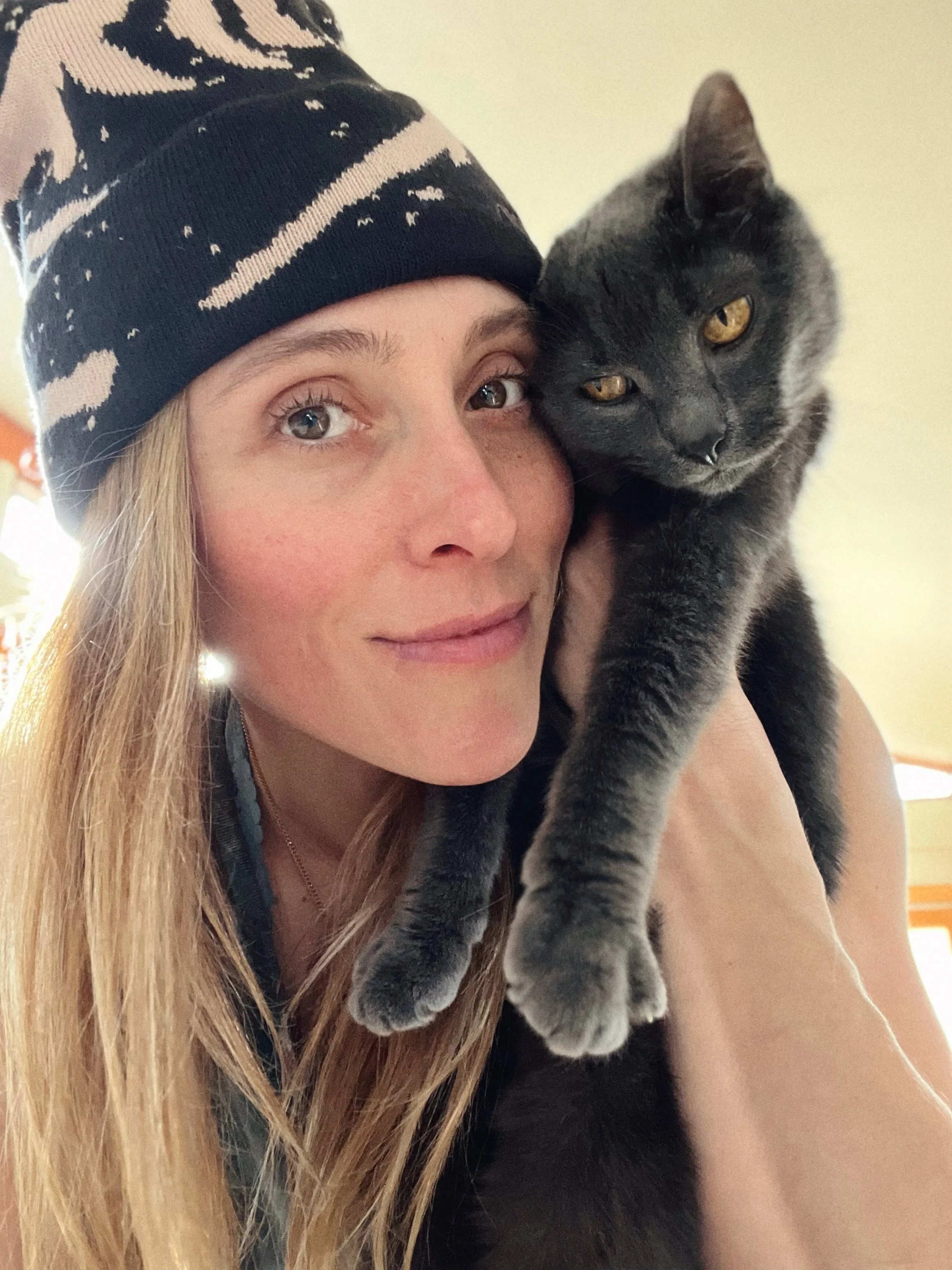
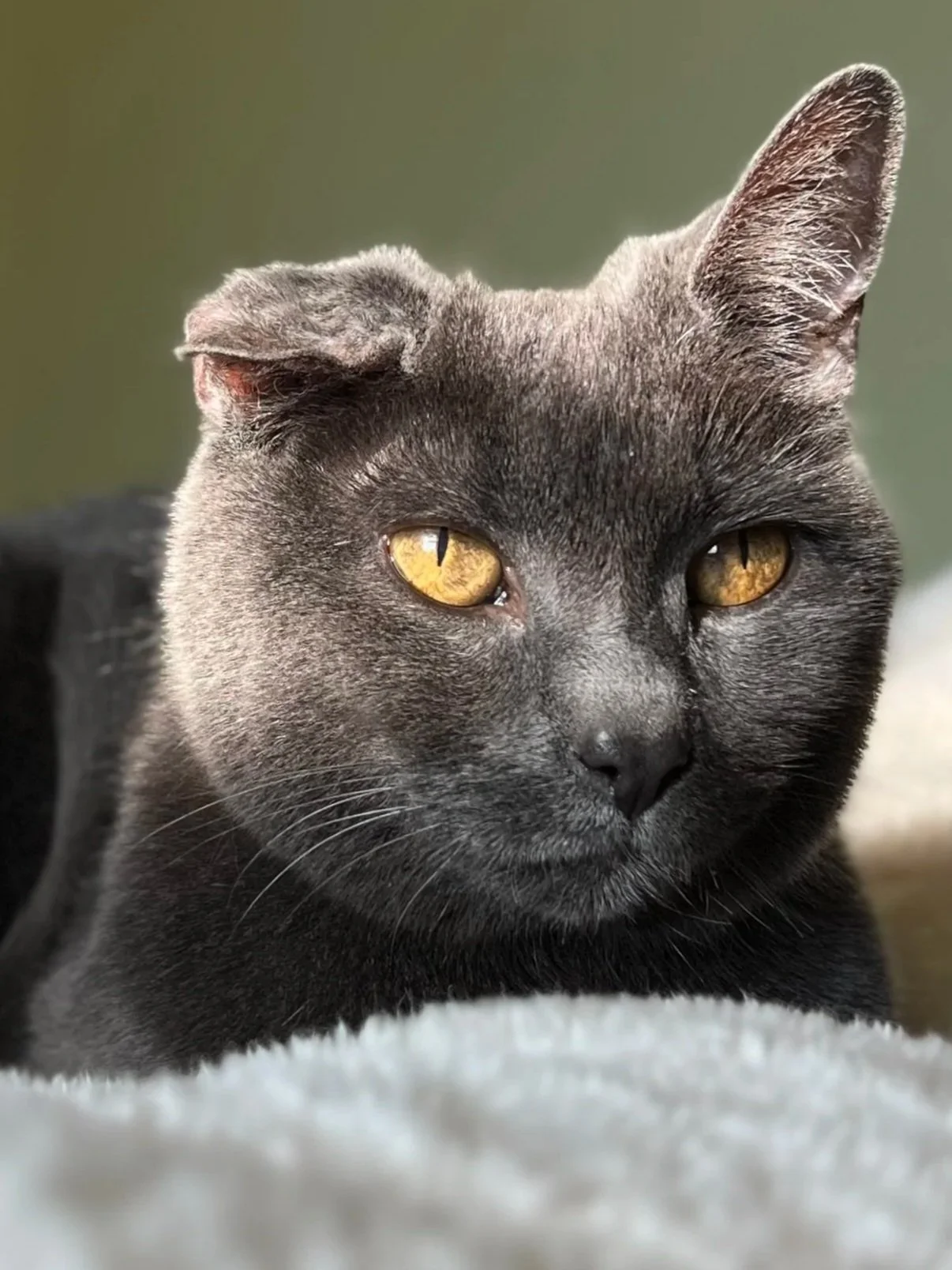
Last week, nearly exactly a year to the date of my mother’s aneurysm rupture, I encountered another emotional hurdle. I tearfully consoled my sweet old grey babe cat, Sophie, as I sent her over the rainbow bridge. She too, succumbed to kidney failure, weighing a frail 3.4lbs (down from about 5lbs) at her time of departure. It happened so quickly. She was intuitive & carried me through so much over the years. Although I’m still heartbroken, I continue to focus, which has been helpful processing the loss of her. Movement is medicine…
Other than Wilderness Traverse this fall, I have no events confirmed on my calendar. Unfortunately I could not run the Escarpment again (ugh!). I have some tentative plans, which I will consider as my training progresses over the next few weeks & when I’m able to start big mountain running again. Most importantly, I have developed a greater curiosity for what’s actually possible, so who knows what I may set out to accomplish.
As for my mother… She’s still in rehab. She’s getting stronger. She’s starting to talk, some days require a bit more deciphering, some days she’s pretty clear. She recently started to move her paralyzed arm & leg, & in PT she confirmed that she was attempting to walk (hooked up to a harness, as she cannot stand on her own). She’s beating the odds & is continually impressing everybody involved with her treatment & care.
I want to remark & thank those who helped keep me afloat this past year. They made consistent, honest check-ins. Their ears were always available to talk when I was falling apart, many times conversations initiated by them because they knew I wasn’t going to reach out. They were patient when I unintentionally ghosted them, & they pushed me to do fun things that on paper, you’d think would leave me more exhausted, but instead fueled me up to battle another day. I was never depressed nor was I anxious, but chronic exhaustion is a beast of its own.
If there’s one takeaway from the past year, it’s that I’m far more resilient than I’ve considered myself to be. Unlike strength, resilience has a focus on flexibility, not always being able to push through, but the ability to get up when you’re down, change directions when necessary, etc. They each have their benefits & they work side-by-side. I find that when faced with obstacles in life, that resilience is more utilized than strength. Many of us underestimate our actual resilience when we need to show up & find (or sometimes crawl) our way through life’s difficulties. Races, adventures, record attempts, etc, all have contributed to greater resiliency outside of sport. Creating comfort in the discomfort. Adapting from unplanned hiccups. The ability to discover beauty, even when it looks & feels real ugly. It’s why I encourage people to get outside & test themselves physically & to be in nature; it strips you down, exposes your soul, leaving you with your mind & heart to carry you through. That’s where resiliency is built & trust me, it’s applicable to everyday life.